Air Source Heat Pump Installation in Plymouth
An air source heat pump replaces your boiler. It takes heat from the outside air and uses it to heat water, which then runs through your radiators or underfloor heating and fills a hot water cylinder for your taps and showers. It’s often called an air-to-water heat pump to distinguish it from the air-to-air systems that heat rooms directly.
For many Plymouth households with gas, oil, LPG or old electric heating, an air source heat pump is the main route to low-carbon heating, and the Boiler Upgrade Scheme can contribute £7,500 towards it — or £9,000 for eligible homes replacing oil or LPG until March 2027. This page explains how the system works, what installation involves and how it compares with an air-to-air heat pump.
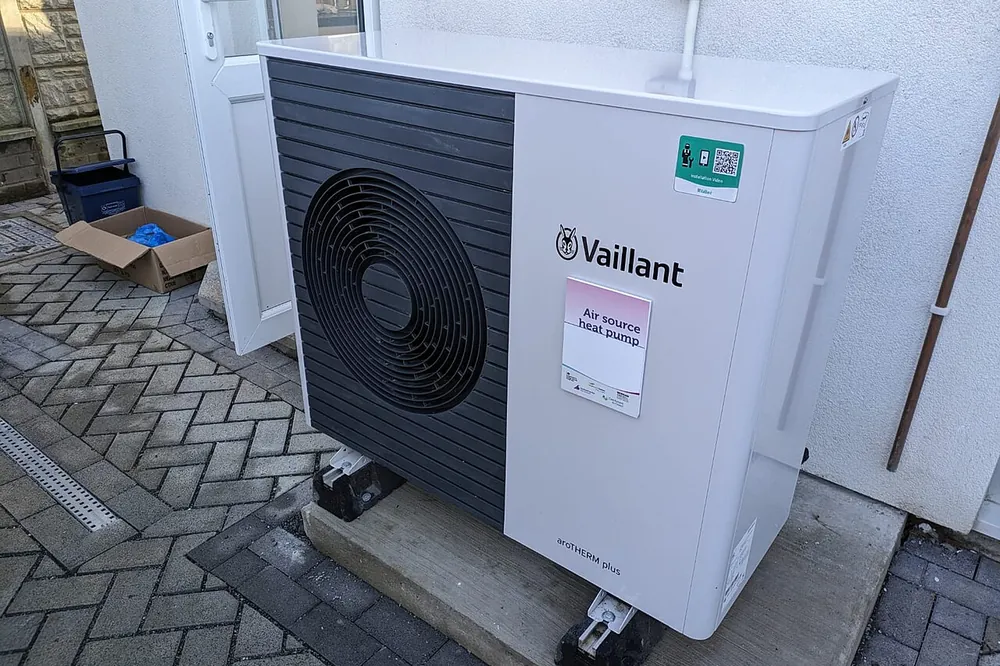
How an Air Source Heat Pump Works
The outdoor unit contains a fan, a coil and a compressor. Refrigerant inside the coil absorbs heat from the outside air, the compressor raises its temperature, and a heat exchanger passes that heat into your heating water. Heat pumps run at lower water temperatures than boilers — typically 35 to 55°C rather than 60 to 70°C — so they work best running steadily for longer periods, keeping the home at an even temperature.
Because the system moves heat rather than burning fuel to make it, it uses far less energy than direct electric heating. How efficient it is in your home depends on the design: the right size of heat pump, radiators large enough to work at lower temperatures, and controls set up to run it steadily.
Air Source or Air-to-Air: Which Do You Need?
| Air source (air-to-water) | Air-to-air | |
|---|---|---|
| Heats | Radiators or underfloor heating, plus hot water | Rooms directly, through wall units |
| Cools | Usually no | Yes |
| Replaces | Your boiler | Electric heaters, or supplements other heating |
| Hot water cylinder | Needed | Not needed |
| Typical price | About £8,000 to £14,000 before grant | About £1,500 to £3,500 per room |
| Grant | £7,500 (£9,000 replacing oil or LPG, until March 2027) | £2,500 |
| Installation time | Typically several days | Usually one to two days |
In short: if you have radiators and want to replace a boiler completely, including your hot water, an air source heat pump is usually the right choice. If you live in a flat, heat with electricity, want to target particular rooms, or want cooling as well, an air-to-air heat pump is often simpler and cheaper. Some homes use both.
Is Your Home Suitable?
Most houses can use an air source heat pump. At the survey we look at:
- Outdoor space for the unit, with good airflow and a sensible distance from neighbours’ windows;
- Room for a hot water cylinder, often where an airing cupboard or old cylinder already is;
- Radiator sizes, since some may need upgrading to deliver enough heat at lower water temperatures;
- Insulation — sensible loft and cavity wall insulation help the system run efficiently;
- The existing pipework and whether any sections need replacing.
Victorian terraces, interwar semis and modern estate houses across Plymouth can all suit air source heat pumps. Flats are often better served by air-to-air systems because of space and building rules.
The Design Process
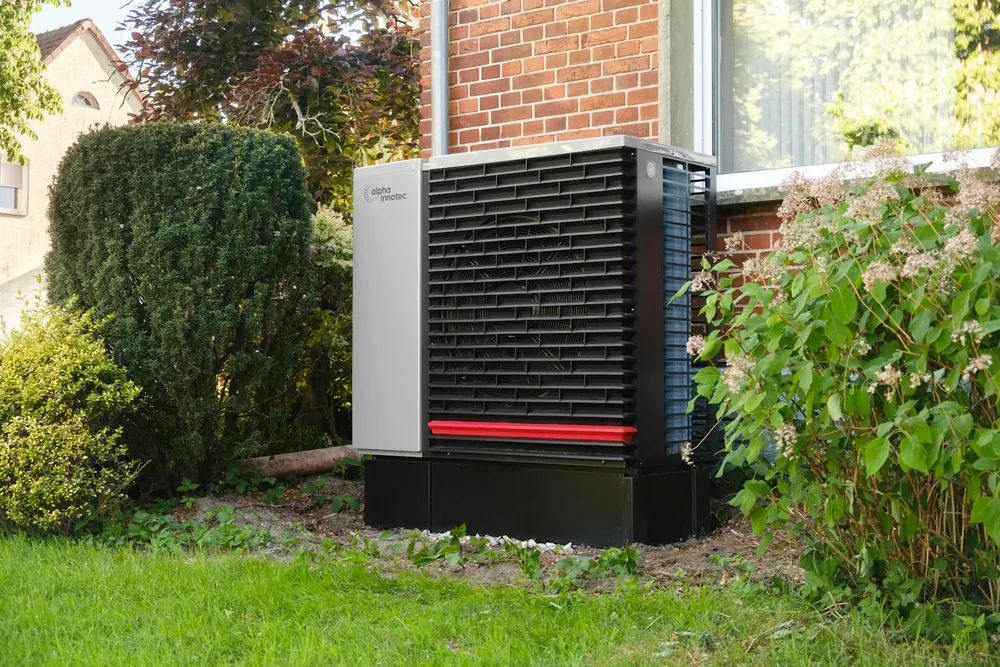
Air source heat pumps installed under the Boiler Upgrade Scheme must meet MCS standards. That means a room-by-room heat loss calculation, a heat pump sized to the home, an assessment of radiator output at the chosen flow temperature and a noise assessment for the outdoor unit. A good design is the single biggest factor in how cheap the system is to run.
You’ll receive a written quote showing the heat pump model and size, the cylinder, any radiator changes, the expected performance and the grant deduction. To claim the grant, your installer must be MCS-certified and a member of a consumer code; we confirm the certification details for your installation in writing with your quote.
What Installation Involves
Remove the old system
The boiler, and any oil tank or LPG supply if you’re switching completely, is disconnected and taken away.
Fit the outdoor unit
The heat pump sits on a level base or wall brackets, connected to the house by insulated pipes.
Install the cylinder and controls
A new hot water cylinder and controls are fitted, usually close to the old cylinder position.
Upgrade radiators where needed
Any radiators identified in the design are replaced with larger ones.
Commission and hand over
The system is filled, balanced and tested, and we show you how the controls and schedules work.
Most installations take several working days. You’ll usually have hot water for most of the work, and we plan any time without heating carefully, especially in winter.
Hot Water With a Heat Pump
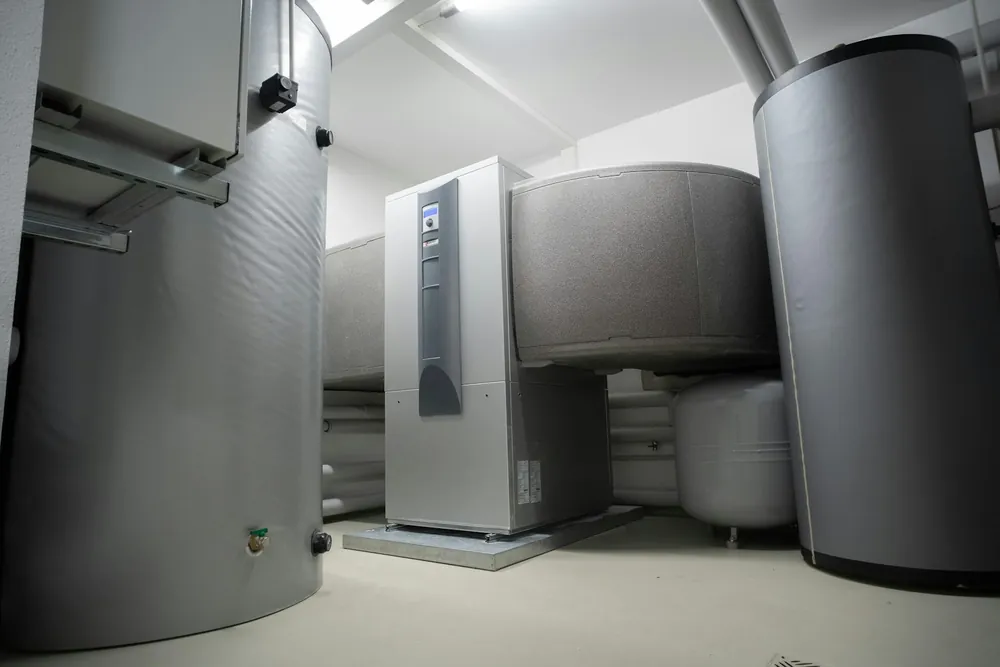
An air source heat pump heats your hot water by warming a well-insulated cylinder, rather than heating water instantly like a combi boiler. The cylinder is sized for your household, so there’s enough hot water for showers and baths at busy times. Once a week or so, the system raises the cylinder temperature higher to protect against bacteria. If you currently have a combi boiler and no cylinder, we’ll look at where one could go — often a utility area, under-stairs cupboard or loft space with suitable support.
Plymouth Homes and Air Source Heat Pumps
Plymouth’s mild, maritime climate is well suited to air source heat pumps. Winters are rarely very cold for long, so the heat pump spends most of the year working in conditions where it’s at its most efficient. The main design challenges are more often about the house than the weather: older terraces with solid walls lose more heat, outdoor space can be tight, and some streets are in conservation areas. With good design, these can all be overcome.
Running Costs
Running costs depend on how well the system is designed, how well the home is insulated and your electricity tariff. A properly designed heat pump is usually cheaper to run than oil, LPG or direct electric heating and is broadly comparable with gas, with lower costs on tariffs designed for heat pumps. We’ll give you an honest estimate for your home rather than a headline figure.
Typical prices in Plymouth
Air source heat pumps are a bigger investment than air-to-air units, but the £7,500 grant — or £9,000 when replacing oil or LPG — covers a large share of the cost.
- Single-room air-to-air heat pumpAbout £1,500 to £3,500
- Two-room system (multi-split)About £3,000 to £6,000
- Whole-home system (4+ rooms)About £5,000 to £12,000+
- Air source heat pump (air-to-water)About £8,000 to £14,000
Guide prices only. Every home is different, so your fixed price comes in a written quote after a free home survey. See full pricing.
Official Information
- GOV.UK: apply for the Boiler Upgrade Scheme — the government’s summary of the Boiler Upgrade Scheme.
- MCS: Microgeneration Certification Scheme — find out more about MCS certification for heat pump installations.
External sites open in a new tab. We’re not connected to or endorsed by any of these organisations.